

How Often Should You Replace Your Furnace Filter?
A simple, Toronto-tested guide to how often to change your furnace filter, what MERV rating to choose, and the warning signs your GTA system is overdue.
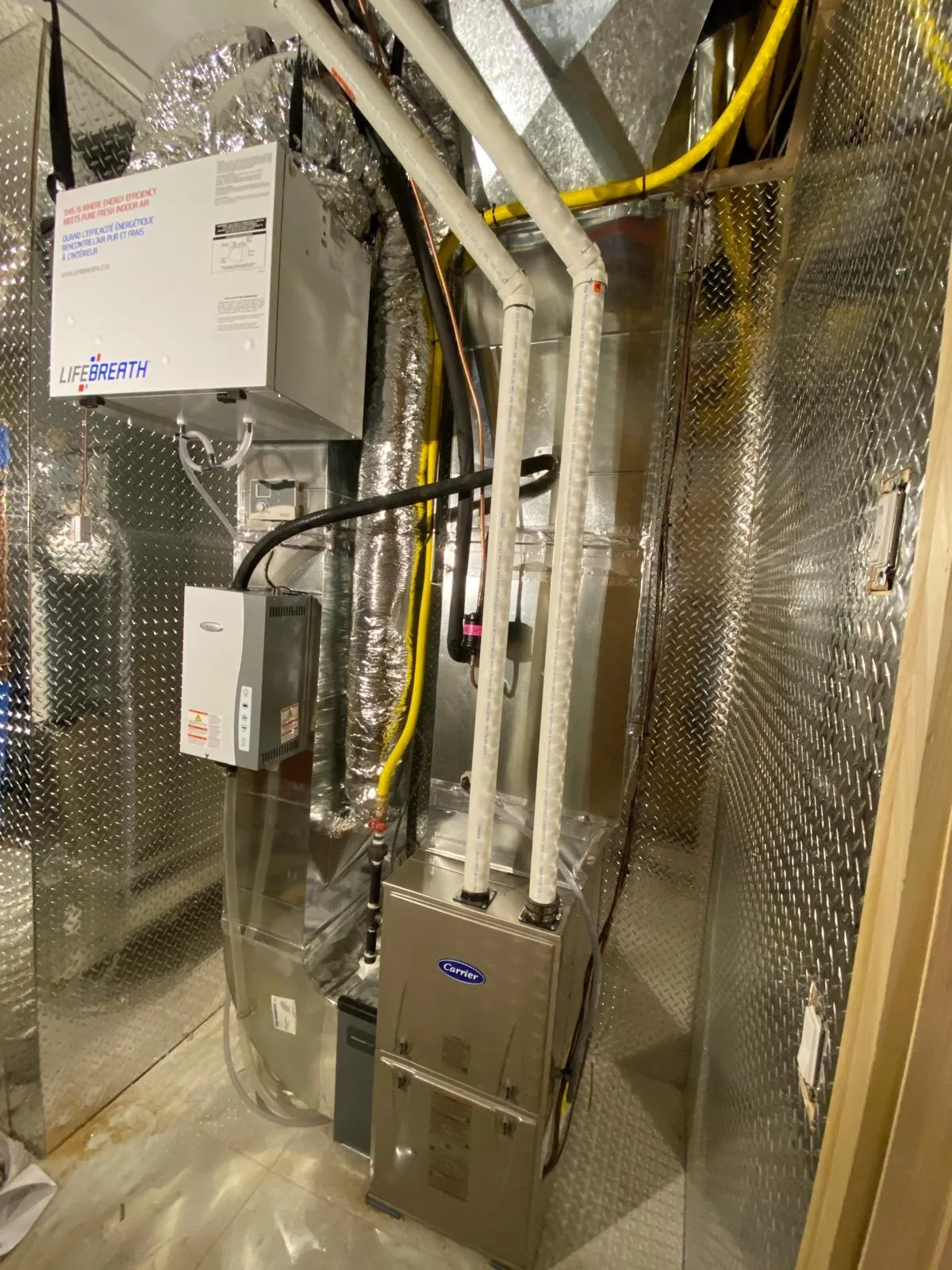
Your furnace filter is the cheapest, most overlooked part of your entire heating and cooling system — and the one most likely to cause problems when it’s neglected. A clean filter protects your equipment, keeps your air healthier, and quietly lowers your energy bills. A clogged one does the opposite.
So how often should you actually replace it? The honest answer is: it depends on the filter type and your home. Here’s how to figure out the right schedule for yours.
The short version: Replace a 1-inch fibreglass or pleated filter every 1–3 months, and a 4–5 inch media filter every 6–12 months. Change them more often if you have pets, allergies, or you’re running the system hard. Match the MERV rating to your equipment — too high can choke airflow. Need a hand? Reach out anytime.
How often to replace, by filter type
Not all furnace filters are the same, and the replacement schedule changes a lot depending on what you have installed.
- 1-inch fibreglass filters — the cheap, see-through panels. Replace every 1 month. They protect the furnace but capture very little dust.
- 1-inch pleated filters — the accordion-folded white ones. Replace every 1–3 months. Better filtration, still affordable.
- 4–5 inch media filters — the thick cabinet-style filters in a dedicated housing. Replace every 6–12 months. Their larger surface area lasts much longer.
- Washable/electrostatic filters — clean per the manufacturer’s instructions, usually monthly.
These are starting points, not hard rules. The right interval for your home depends on a few things below.
What makes you change it more often
The schedule above assumes an average household. Several common situations shorten it considerably:
- Pets — fur and dander load a filter fast. With shedding pets, lean toward the short end of every range.
- Allergies or asthma — a cleaner filter, changed more often, makes a real difference indoors.
- Renovations or construction dust — drywall and sawdust clog filters in weeks. Check weekly during a project.
- Running the system hard — through a Toronto heat wave or a deep January cold snap, the blower runs more, so the filter loads faster.
- Smokers in the home or nearby wildfire smoke during summer.
A good habit: check your filter on the first of every month. Hold it up to a light. If you can’t see light through it, replace it — no matter what the calendar says.
Understanding MERV ratings
MERV stands for Minimum Efficiency Reporting Value. It’s a 1–16 scale (for residential filters) that measures how well a filter captures particles. Higher MERV captures smaller particles — but there’s a trade-off, which we’ll get to.
| MERV Rating | What it captures | Best for | Airflow trade-off |
|---|---|---|---|
| MERV 8 | Dust, pollen, lint, mould spores, pet dander | Everyday homes, basic protection | Low — easy on most systems |
| MERV 11 | The above, plus finer dust and some smoke | Homes with pets or mild allergies | Moderate — fine for most furnaces |
| MERV 13 | The above, plus very fine particles, smoke, some bacteria | Allergy/asthma households, smoke season | Higher — only if your system is rated for it |
For most GTA homes, MERV 8 to 11 is the practical sweet spot. It filters well without making your furnace work harder than it should.
The airflow trade-off — don’t just buy the highest MERV
It’s tempting to grab the highest-rated filter on the shelf, assuming more filtration is always better. It isn’t.
A higher-MERV filter is denser, so it’s harder for your blower to pull air through. A residential furnace not designed for a high-MERV filter can struggle — leading to reduced airflow, an overworked blower motor, and in some cases the same overheating that a dirty filter causes.
The rule: match the filter to the equipment. A thin 1-inch slot is usually happiest with MERV 8–11. If you want true MERV 13 filtration, a thick 4–5 inch media cabinet handles it far more comfortably because of its larger surface area. If you’re unsure what your system can take, ask us — it’s a quick question during any maintenance visit.
For more on improving the air you breathe indoors over the colder months, see our guide on indoor air quality in winter.
Signs your filter is overdue
You don’t have to wait for the calendar. Your system will usually tell you when the filter needs attention:
- Weak airflow from the vents — rooms feel stuffy or take longer to heat and cool.
- More dust settling on surfaces, even after cleaning.
- Higher energy bills with no change in your habits — a clogged filter forces the system to run longer.
- The system short-cycles — turning on and off in quick bursts.
- The furnace overheats or shuts down entirely (more on that below).
- A visibly grey or matted filter when you pull it out.
If you’re seeing several of these, the filter is your first and cheapest thing to rule out.
Why a clogged filter can shut your furnace down
This is the big one — and the reason a $15 filter can save you a no-heat night.
When a filter clogs, airflow drops. The heat the furnace produces can’t move away fast enough, so the heat exchanger gets too hot. To protect the equipment (and your home), a safety device called the high-limit switch shuts the burners down.
From the outside, this looks exactly like a furnace that “won’t turn on.” It’s actually a furnace protecting itself. This is why a dirty filter is one of the first things we ask homeowners to check during a no-heat call — it’s covered in detail in our furnace not turning on guide.
The same airflow logic applies in summer, by the way. A clogged filter can freeze your AC coil, so a filter check belongs on your summer AC maintenance checklist too.
How to find your size and change the filter
Replacing a filter is a five-minute, no-tools job for most homes.
- Find the size. It’s printed on the cardboard edge of your current filter — three numbers like 16x25x1 (length × width × thickness, in inches). If it’s worn off, measure the slot.
- Note the airflow arrow. Every filter has an arrow showing airflow direction — it should point toward the furnace (the direction air is moving).
- Turn the system off at the thermostat before you swap it.
- Slide the old one out, the new one in, arrow pointing the right way.
- Write the date on the new filter’s edge with a marker so you know when it went in.
Buy a few at once so you always have a spare on hand — running out is the main reason filters get left in too long.
When to call Delson Air
Changing a filter is easy. Knowing the right MERV rating for your specific equipment, or sorting out why your airflow still feels weak after a fresh filter, is where a professional helps.
At Delson Air (“Home Comfort”), we serve homeowners across the GTA — Toronto, Mississauga, Markham, Vaughan, Brampton, Richmond Hill, Oakville and surrounding areas. We’re licensed, insured, TSSA-licensed, and an Enbridge Authorized Contractor, so the advice you get is held to Ontario’s standards.
If you’d like us to confirm the right filter for your system, diagnose persistent airflow or dust problems, or set you up on a regular maintenance schedule, call (647) 467-9919 or get in touch. Your comfort is our priority — and it often starts with something as simple as a clean filter.
FAQ
Common questions
How often should I change a 1-inch furnace filter?
What MERV rating is best for a home furnace?
Can a dirty furnace filter make my furnace shut off?
How do I find the right size furnace filter?
Delson Air Team
Licensed, insured, TSSA-certified HVAC technicians serving the Greater Toronto Area.
Keep reading
More from the Journal
HVAC Maintenance Plans: What's Included in 2026
What an HVAC maintenance plan actually covers in 2026 — priority dispatch, repair discounts, waived diagnostic fees, and tune-ups for GTA homeowners.
Fall HVAC Maintenance Checklist for Ontario Homes
A complete fall HVAC maintenance checklist for GTA and Ontario homeowners — furnace prep, filters, humidifier, thermostat, ducts, and when to call a pro.
Furnace Tune-Up in Toronto: Why Early Fall Is the Best Time
Why early fall is the smartest window to book a furnace tune-up in Toronto and the GTA — what's included, what it costs, and what to expect.