

What Size Air Conditioner Does My GTA Home Need?
Sizing a central AC for your Toronto or GTA home? Learn how BTU and tonnage work, why bigger isn't better, and the square-footage ranges to start from.
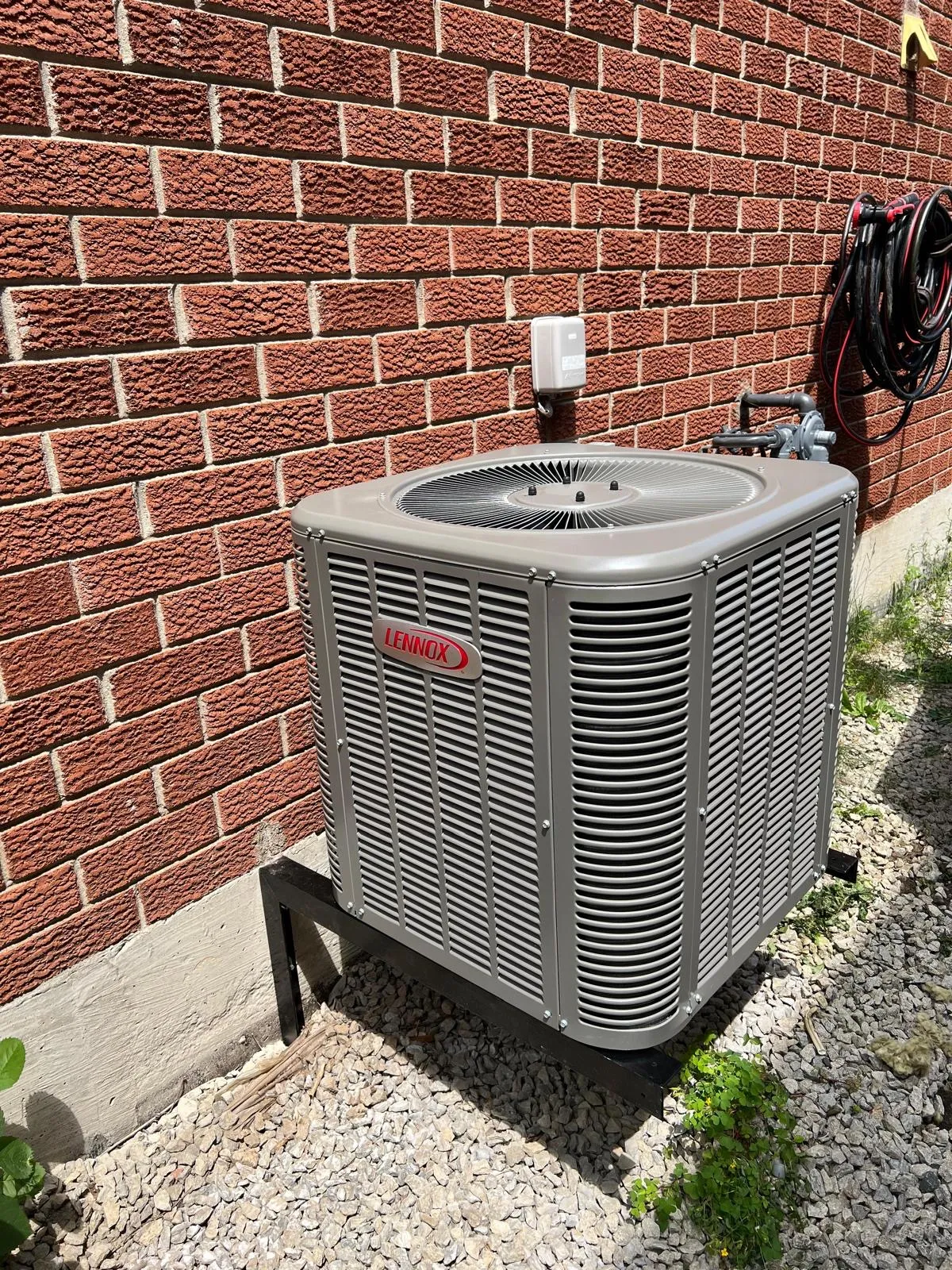
Picking a central air conditioner sounds like it should be simple: tell me the square footage, give me a number. In reality, sizing is the single most important decision in a cooling install — and the one most often gotten wrong. Get it right and your home stays evenly cool and comfortably dry through a humid GTA July. Get it wrong and you’re stuck with clammy rooms, high bills, and a unit that wears out early.
The good news is that the logic isn’t complicated once you understand two numbers — BTU and tonnage — and why “just buy the biggest one” is exactly the wrong instinct.
The short version: Air conditioners are sized in tons (12,000 BTU each), and bigger is not better — an oversized unit short-cycles, never dehumidifies properly, and wears out fast. Square-footage charts are only a rough starting point; the right size comes from a proper Manual J load calculation of your actual home. When you’re ready, book an assessment or call us at (647) 467-9919.
BTU and tonnage, explained simply
Cooling capacity is measured in BTU — British Thermal Units — which describe how much heat the system can move out of your home in an hour. The bigger the number, the more cooling.
Because residential numbers get large, the industry uses tons as shorthand:
- 1 ton = 12,000 BTU per hour
- A 2-ton unit = 24,000 BTU
- A 3-ton unit = 36,000 BTU
The term is historical — it traces back to the cooling power of a ton of melting ice — and has nothing to do with the weight of the equipment. Most homes in the GTA fall somewhere between 1.5 and 5 tons, and central units are typically sold in half-ton steps.
Why bigger is not better
This is the part that surprises most homeowners. It feels logical that a larger AC would cool a house better. It doesn’t.
An oversized air conditioner cools the air temperature quickly, then shuts off — long before it has pulled enough moisture out of the air. The result is a house that feels cold and clammy at the same time. Comfort is about humidity as much as temperature.
An air conditioner does two jobs at once: it lowers the temperature and it removes humidity. That second job only happens while the system is running. An oversized unit hits the thermostat setpoint in a few minutes, switches off, then kicks back on a short while later. This short-cycling causes a string of problems:
- Poor humidity control — short runs never dry the air, so rooms feel muggy
- Hot and cold spots — cycles end before air reaches the far rooms
- More wear — the compressor takes the biggest hit at start-up, so frequent cycling shortens its life
- Wasted energy — repeated start-ups draw extra power without delivering steady comfort
Undersizing causes the opposite trouble: the unit runs constantly on the hottest days, never quite catches up, and still struggles to keep the house comfortable. The goal is the right size — one that runs long, steady cycles.
Square footage: a starting estimate only
You’ll find plenty of “square feet to tons” charts online, and they’re useful for a ballpark. The table below gives rough ranges for typical GTA homes. Treat it as a conversation starter, not a spec sheet.
| Home size (sq ft) | Rough tonnage | Approx. BTU/hour |
|---|---|---|
| Up to 1,000 | 1.5 tons | ~18,000 |
| 1,000 – 1,500 | 2.0 tons | ~24,000 |
| 1,500 – 2,000 | 2.5 tons | ~30,000 |
| 2,000 – 2,500 | 3.0 tons | ~36,000 |
| 2,500 – 3,000 | 3.5 tons | ~42,000 |
| 3,000 – 3,500 | 4.0 tons | ~48,000 |
Starting estimates for typical GTA homes — not a substitute for a load calculation. Your actual size may differ by a half-ton or more in either direction.
Why the caution? Because two homes of identical square footage can need very different units. A 2,000 sq ft century home in Toronto’s east end with original windows and modest insulation has a completely different cooling load than a new 2,000 sq ft build in Vaughan with high-performance glazing and a tightly sealed envelope.
What a real load calculation accounts for
The industry-standard method is the Manual J load calculation. It treats your home as the unique building it is, accounting for the factors a square-footage chart can’t see:
- Square footage and layout — the baseline, but only the beginning
- Insulation levels — in the walls, attic, and basement
- Windows — how many, what type, and which way they face (a wall of west-facing glass adds serious afternoon heat load)
- Ceiling height — vaulted or two-storey spaces hold more air to cool
- Air sealing and ductwork — leaks and drafts change the math; see our notes on rooms that won’t cool evenly
- Occupants and heat sources — people, appliances, and big sun-facing rooms all add load
- Local climate — the GTA’s hot, humid summers set the design conditions
A proper calc weighs all of this and produces a defensible number — not a guess. It’s the difference between a system designed for your home and one simply slotted in by floor area.
Don’t just match your old unit
A common shortcut is to read the model number off the old condenser and order the same size. It’s tempting, but risky:
- Your old unit may have been oversized from day one — a frequent mistake, so you’d be repeating it
- Your home may have changed — new windows, added attic insulation, a finished basement, or an addition all shift the cooling load
- Equipment efficiency has improved, and modern variable-speed systems behave differently from a 15-year-old single-stage unit
Replacing like-for-like can quietly lock in an old error for another decade or more. A fresh load calculation confirms what the home in front of you actually needs.
A few things to weigh beyond size
Once you have the right capacity, a couple of related decisions shape your comfort and running costs:
- Efficiency rating (SEER2): Higher-efficiency units cost more up front but use less power each summer. The right balance depends on how long you plan to stay in the home.
- Single-stage vs. variable-speed: Variable-speed compressors can run at low output for long, quiet, dehumidifying cycles — often a strong match for our humid summers.
- Rebates: Efficient cooling equipment may qualify for incentives. Our guide to Ontario HVAC rebates for 2026 is a good place to check what’s available before you buy.
- Maintenance: Even a perfectly sized unit underperforms if it’s neglected. Our summer AC maintenance checklist keeps it running at its rated capacity.
You can see the full range of options on our services page.
When to call Delson Air
Sizing a central air conditioner well is part measurement, part judgement — and it’s worth getting right the first time. A unit that’s off by even a half-ton can mean years of clammy rooms, uneven temperatures, and higher bills.
That’s where a licensed pro earns their keep. Delson Air serves Toronto, Mississauga, Markham, Vaughan, Brampton, Richmond Hill, Oakville and the surrounding GTA. We’re licensed, insured, TSSA-licensed and an Enbridge Authorized Contractor, so the load calc, the equipment selection, and the install are all handled by people who do this every day.
When you’re ready for a straight answer about the right size for your home, get in touch or call us at (647) 467-9919. Your comfort is our priority — and it starts with the right-sized system.
FAQ
Common questions
How many tons of air conditioning do I need for a 2,000 sq ft house in the GTA?
Is a bigger air conditioner better?
What is the difference between BTU and tonnage?
Can I just match the size of my old air conditioner?
Delson Air Team
Licensed, insured, TSSA-certified HVAC technicians serving the Greater Toronto Area.
Keep reading
More from the Journal
AC Installation in Vaughan: Sizing, Local Costs, and What to Expect
Planning a central AC install in Vaughan? Here's how sizing, ductwork, permits and 2026 GTA pricing actually work — from Woodbridge to Maple and Thornhill.
Mid-Summer AC Problems and What They Mean
Mid-summer AC problems in the GTA decoded — what warm air, ice, odd noises and short cycling really mean for Toronto and Ontario homeowners.
How to Lower Your Cooling Bill This Summer in the GTA
Practical ways Toronto and GTA homeowners can cut summer cooling costs — thermostat settings, AC tune-ups, sealing leaks, and rebates that actually move the needle.